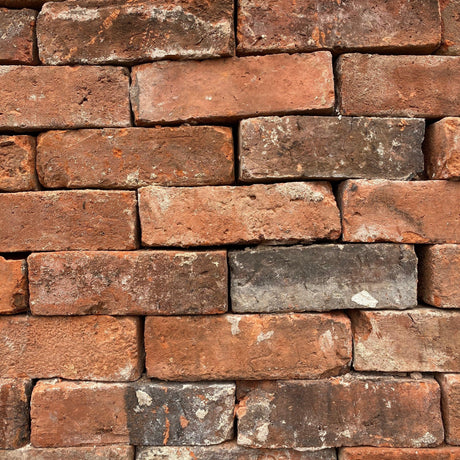
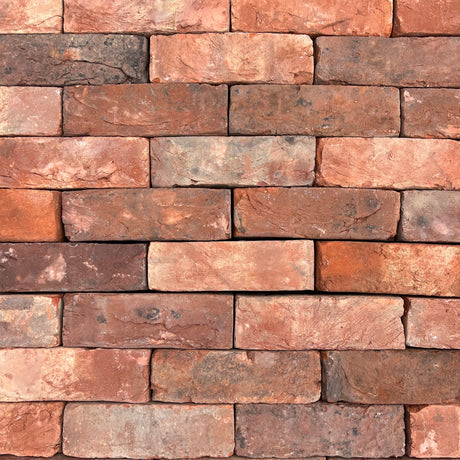
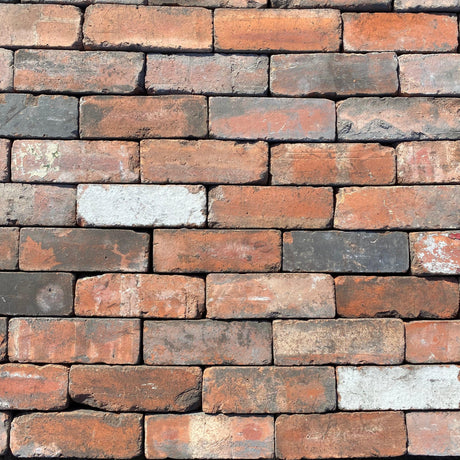
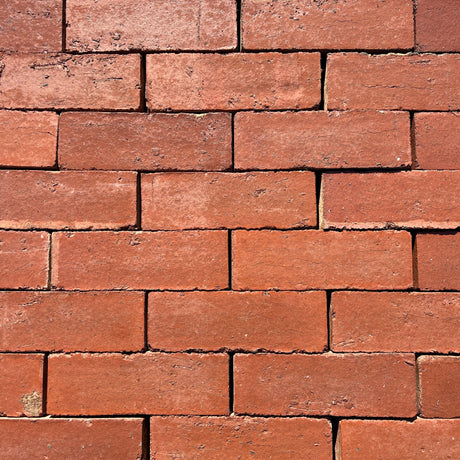
Truly Reclaimed Brick Slips
Reclaimed Brick Company has announced a significant milestone for the UK salvage and reuse sector, becoming the first materials supplier in the country to offer a complete range of Truly Reclaimed brick...
Luke Clarke |
Imperial bricks were the standard brick size in the UK before the country adopted the metric system in the early 1970s. They typically measure around 68mm to 76mm in height x 228mm in length x 110mm depth (3" x 9" x 4 1/4"), although variations existed depending on the region and period of manufacture. Many heritage properties, Victorian terraces, Edwardian homes, and early 20th-century buildings were constructed entirely with imperial bricks.
Because these bricks are slightly larger than today’s metric versions, they create a distinctive coursing pattern and architectural appearance. This is why matching imperial brickwork with modern materials can be challenging.
Imperial bricks are the traditional brick sizes used in the UK before the transition to metric standards in the early 1970s. While dimensions varied slightly depending on the region, manufacturer, and period of production. Here we have compiled a list of the most commonly recognised imperial brick size found across the UK.
3" x 9" x 4 1/4" or 76mm x 228mm x 108mm
2 3/4" x 9" x 4 1/4" or 68mm x 228mm x 108mm
2 3/8" x 9" x 4 1/4" or 60mm x 228mm x 108mm
3 1/4" x 9" x 4 1/4" or 80mm x 228mm x 110mm
3 3/8" x 9" x 4 1/4" or 85mm x 228mm x 110mm
2 7/8" x 9" x 4 1/4" or 73mm x 228mm x 108mm
2 1/2" x 9" x 4 1/4" or 63mm x 228mm x 108mm
2" x 9" x 4 1/4" or 50mm x 228mm x 108mm
These dimensions differ noticeably from today’s metric bricks, which measure 65mm x 215mm × 102.5mm. Although the difference may seem small, it becomes highly visible in brickwork. Using metric bricks alongside imperial ones leads to misaligned courses, inconsistent mortar joints, and a visibly uneven finish.
At the Reclaimed Brick Company, we specialise in supplying high-quality imperial bricks to customers across the UK. These traditional bricks, typically measuring 228mm × 108mm × 73mm, were the standard size before the UK adopted metric sizing in the 1970s. They are essential for heritage restorations, period property extensions, and conservation projects, ensuring an authentic match to original brickwork.
Our stock of reclaimed imperial bricks & new imperial bricks are carefully sourced from historic buildings and traditional brick factories, then professionally cleaned and graded by hand. This process ensures every brick retains its unique character while being ready for reuse in construction.
Whether you are restoring a Victorian terrace, extending an Edwardian home, or undertaking a listed building project, our expert team can help you find the perfect match for your property. With nationwide delivery and competitive pricing, the Reclaimed Brick Company is a trusted UK supplier for builders, architects, and homeowners.
Explore our range today and shop imperial bricks with confidence, knowing you are investing in quality, sustainability, and heritage preservation.
Imperial bricks form a significant part of Britain’s architectural heritage. Before the UK adopted the metric system in the early 1970s, all bricks were produced to imperial measurements, typically around 73mm in height, 228mm in length, and 108mm in width. These bricks were used in everything from Georgian townhouses and Victorian terraces to Edwardian homes and early 20th-century buildings, shaping the character of towns and cities across the country.
The origins of imperial sizing can be traced back centuries, with brick dimensions gradually evolving due to local practices, regional traditions, and government regulations. One key event that influenced brick sizes was the Brick Tax of 1784, which charged builders based on the number of bricks used rather than their weight. In response, brickmakers began producing larger bricks to reduce the overall number required, leaving a legacy of size variations that can still be seen in historic buildings today.
Imperial bricks were the standard right up until the 1970s, when the UK moved to metric sizing in line with European standards. The new metric brick, measuring 65mm in height, became the norm for modern construction. However, this shift created a challenge for anyone working on older properties. Using metric bricks alongside imperial ones leads to misaligned courses, visible size differences, and an inconsistent finish.
Today, reclaimed imperial bricks are highly sought after for renovations, extensions, and conservation projects. Their larger dimensions, combined with the unique patina and colour that only age can provide, make them essential for maintaining the authenticity of period properties. At the Reclaimed Brick Company, we specialise in sourcing and supplying these traditional bricks, helping to preserve the history and character of the UK’s built environment.
The difference between imperial bricks and metric bricks is an important consideration for builders, architects, and homeowners working on projects that involve older properties. While both types of bricks serve the same structural purpose, their sizes differ significantly, which can have a major impact on the look and finish of a building.
Imperial size bricks were the standard in the UK before the country adopted the metric system in the early 1970s. They typically measure around 73mm in height, although variations existed depending on the region and period of manufacture. Many heritage properties, Victorian terraces, Edwardian homes, and early 20th-century buildings were constructed entirely with imperial bricks.
Because these bricks are slightly larger than today’s metric versions, they create a distinctive coursing pattern and architectural appearance. This is why matching imperial brickwork with modern materials can be challenging.
Following the shift to the metric system, the UK standardised brick dimensions to 65mm in height. These metric bricks are now used across almost all new construction projects. While smaller in height, metric bricks provide uniformity, allowing modern buildings to follow a consistent standard that simplifies manufacturing, supply, and construction.
When repairing or extending an older property built with imperial bricks, using metric bricks can create a noticeable misalignment in the coursing of the wall. Even a difference of just 8mm per brick can add up over several courses, leading to mismatched joints and an inconsistent finish.
This is why sourcing reclaimed imperial bricks is so important. They ensure a seamless match with existing walls, preserving both the structural integrity and the visual harmony of the property.
At the Reclaimed Brick Company, we supply a wide range of reclaimed bricks and new bricks. These bricks not only provide the correct size for heritage restorations and extensions but also come with the unique character, colour, and texture that only time can create. By choosing imperial bricks, you can maintain the authenticity of traditional brickwork while also supporting sustainable construction practices.

Reclaimed Brick Company,
Clifton Works, Hillfoot Road
Sheffield, S3 8AA
Email: info@reclaimedbrickcompany.co.uk
Telephone: 0114 206 1113
Whatsapp: 07435516667
Opening Times:
Mon - Fri, 8:00am - 4:00pm
Saturday, 8:00am - 1:00pm
Sunday, Closed
Imperial bricks are traditional UK bricks produced before the country adopted the metric system in the 1970s. They are typically larger than modern metric bricks, often measuring around 228mm in length, 108mm in width, and 73mm in height. These bricks were used in Victorian, Edwardian, and early 20th-century buildings.
Using reclaimed imperial bricks is essential for heritage restorations and period properties because they match the original brick sizes, colour, and texture. This ensures seamless coursing and maintains the architectural integrity of older buildings.
Imperial bricks are larger than modern metric bricks (65mm high), which can lead to misaligned walls if metric bricks are used in a period property. Reclaimed imperial bricks maintain the traditional coursing and appearance for authentic restorations.
Yes. Reclaimed imperial bricks can be used in both new-build and extension projects to create a traditional brick appearance. They are durable, environmentally friendly, and ideal for projects that require a classic aesthetic.
The Reclaimed Brick Company specialises in sourcing and supplying authentic imperial bricks from historic buildings across the UK. We clean, grade, and deliver bricks suitable for period property renovations, extensions, and landscaping projects.
Yes. Using reclaimed imperial bricks reduces construction waste and lowers embodied carbon, supporting sustainable building practices. Each brick is reused, preserving materials and reducing the demand for new manufacturing.
Standard imperial bricks usually measure 228mm (length) × 108mm (width) × 73mm (height), though sizes may vary slightly depending on the building era and regional practices. These dimensions differ from modern UK metric bricks.
Matching imperial bricks to modern metric bricks is challenging due to size differences. For seamless results in restorations or extensions, using reclaimed imperial bricks ensures consistent coursing, colour, and texture with existing walls.
The cost of reclaimed imperial bricks varies depending on quantity, condition, and sourcing. Prices range from 80p to £1.50 per brick. Prices are typically higher than standard new bricks due to their rarity, authenticity, and sustainable production.
Absolutely. Reclaimed imperial bricks are perfect for Victorian, Edwardian, and early 20th-century homes, as they match the original brick sizes, colour variations, and coursing patterns of historic masonry.